Shifts the first argument by the number of bits given by the second argument. Argument should have TINYINT, SMALLINT, INTEGER, BIGINT, BINARY, or BINARY VARYING data type. This function returns result of the same data type. If number of bits is negative, a signed left shift is performed instead.

For numeric values a sign bit is used for left-padding . If number of bits is equal to or larger than number of bits in value all bits are pushed out from the value. For binary string arguments signed and unsigned shifts return the same results. By allocating variables with data types that are large enough to contain all values that may possibly be computed and stored in them, it is always possible to avoid overflow.
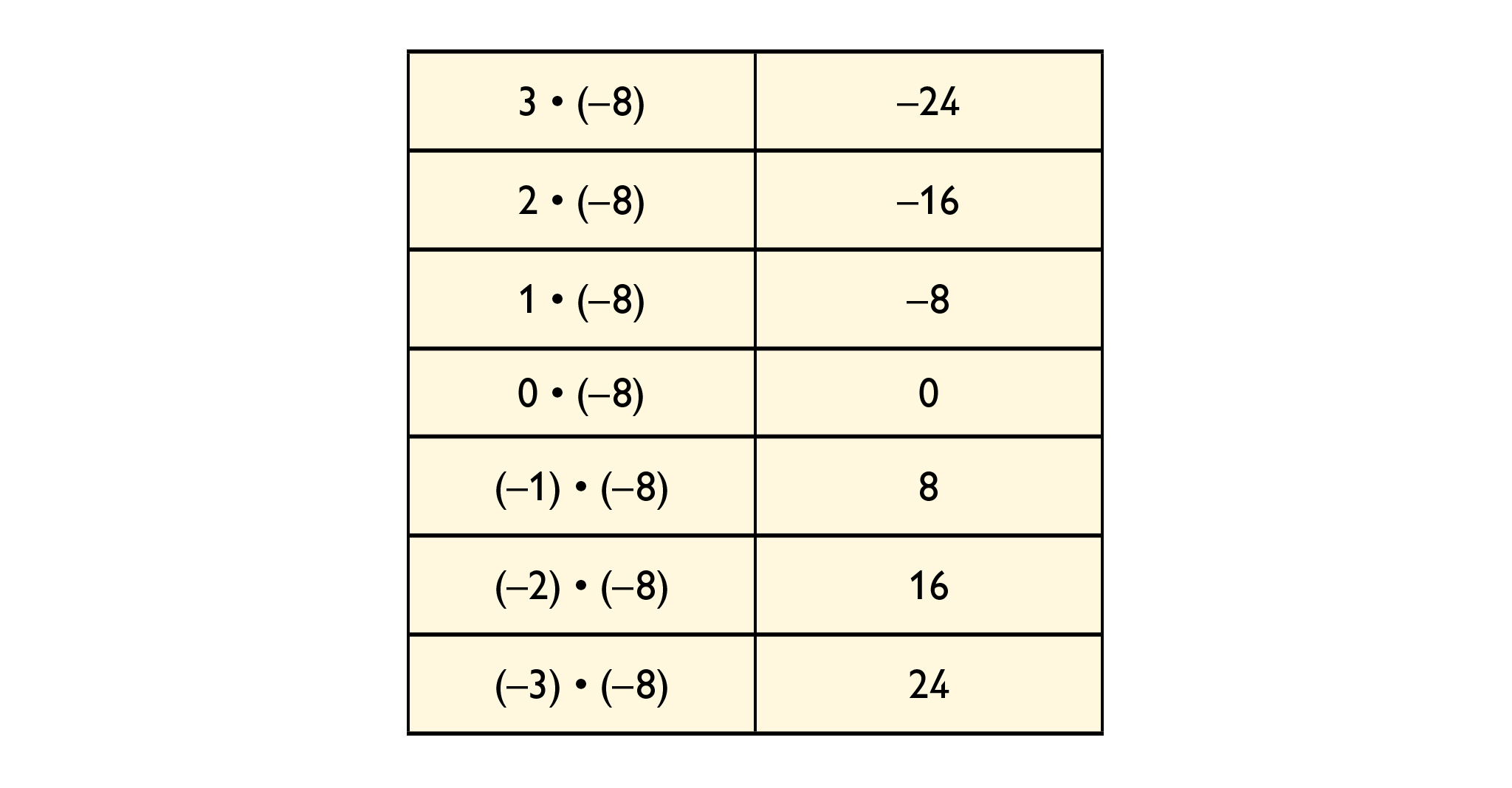
Static analysis tools, formal verification and design by contract techniques can be used to more confidently and robustly ensure that an overflow cannot accidentally result. If number of bits is negative, a signed right shift is performed instead. The way I defined shifting in my replies, on all sign-magnitude implementations, shifting would have to use bit masking operations in order to achieve correct results. Effectively, left shift becomes a multiply by 2 to the power of the right side. On a two's complement machine, signed and unsigned left shifts are the same operation. The signed overflow bit is defined the same way for positive and negative operands.

The modulo operator is represented by the symbol (%). In computational operations, when a function returns the remainder or signed remainder if one integer is divided by another is the modulo operator function. Since it is working on integers ,it is called integer remainder operator. In programming languages like C, you choose whether to use the signed or unsigned flavor of a given numeric type. Unsigned data types are more suitable when you know for sure that you'll never need to deal with negative numbers.

By allocating that one extra bit, which would otherwise serve as a sign bit, you practically double the range of available values. All operations behave as if BigIntegers were represented in two's-complement notation (like Java's primitive integer types). BigInteger provides analogues to all of Java's primitive integer operators, and all relevant methods from java.lang.Math. If number of bits is negative, an unsigned left shift is performed instead. Another challenge is keeping a consistent behavior of the bitwise operators across alternative integer types, which is crucial in handling the sign bit.

Recall that fixed-precision integers in Python use the standard two's complement representation from C, while large integers use sign-magnitude. In other words, it fills the gap on the left with whatever the sign bit was. Combined with the two's complement representation of signed binary, this results in an arithmetically correct value.

Regardless of whether the number is positive or negative, an arithmetic right shift is equivalent to floor division. Modulo Operator is one of the fundamental operators in Java. It's a binary operator i.e. it requires two operands.

In a division operation, the remainder is returned by using the modulo operator. For example, 5%2 will return 1 because if you divide 5 with 2, the remainder will be 1. For a programmer it's very important to know how to use this operator, they are very important to build logic. Handling possible overflow of a calculation may sometimes present a choice between performing a check before the actual calculation , or after it . Caution should be shown towards the latter choice.

Firstly, since it may not be a reliable detection method . Secondly, because the occurrence of overflow itself may in some cases be undefined behavior. It is thus advisable to always prefer to implement checks before calculations not after them.

Second, unexpected behavior can result when you mix signed and unsigned integers. In a mathematical operation in C++ (e.g. arithmetic or comparison), if one signed and one unsigned integer are used, the signed integer will be converted to unsigned. And because unsigned integers can not store negative numbers, this can result in loss of data. Thanks for listing these interesting use of modulus operator. One more I can add is on implementing hash function on hash table to convert hash keys into array indexes.

You cannot understand anything better without any example. The same is true for the modulo operators in Java. In this example, we shall show you how to use the modulo operator. The modulo operator is an arithmetic operator that is used to divide one operand by another and return the remainder as its result.

You use the modulo operator to get the remainder of the division between an int variable and 10 and a double variable and 10, as described in the code snippet below. Rotates the first argument by the number of bits given by the second argument. If number of bits is negative, an unsigned right shift is performed instead. Converts expression1 and expression2 to 32-bit unsigned integers, and performs a Boolean AND operation on each bit of the integer parameters. Floating-point numbers are converted to integers by discarding any digits after the decimal point.

The modulus operator returns the remainder of a division of one number by another. In most programming languages, modulo is indicated with a percent sign. For example, "4 mod 2" or "4%2" returns 0, because 2 divides into 4 perfectly, without a remainder. There are ways to emulate the sign bit and some of the unsigned types in Python, though.

However, since bit sequences in Python aren't fixed in length, they don't really have a sign bit. Moreover, they don't use the traditional two's complement representation like in C or Java. Modulo operator is also known as Remainder operator and denoted by percentage sign (%). It's one of the most basic operators and very useful to create logic in programming, available in almost every single programming language.

As we learn in first paragraph, in Java modulus, operator can also be applied to floating-point numbers e.g. 3.0%1.0 is perfectly legal in Java. Since it return remainder value in division operation it is also known as remainder operator. Semantics of arithmetic operations exactly mimic those of Java's integer arithmetic operators, as defined in The Java Language Specification. For example, division by zero throws an ArithmeticException, and division of a negative by a positive yields a negative remainder.

All of the details in the Spec concerning overflow are ignored, as BigIntegers are made as large as necessary to accommodate the results of an operation. It is worth noting that the behavior upon occurrence of overflow may not be consistent in all circumstances. In C, unsigned integer overflow is defined to wrap around, while signed integer overflow causes undefined behavior. However, when the compiler is set to strict mode, all types are also checked at compile time, and errors are generated when there is a mismatch. Mismatches can occur during assignment operations, function calls, and class member dereferencing using the dot (.) operator. Destroys the object property specified by reference; the result is true if the property does not exist after the operation completes, and false otherwise.
The delete operator returns true if it is called on a nonexistent property or a dynamic property not defined in a class. Assigns the value of expression2 to the variable, array element, or property in expression1. Assignment can be either by value or by reference. Assignment by value copies the actual value of expression2 and stores it in expression1.
Assignment by value is used when expression2 is a primitive value, which means that its data type is either Boolean, Number, int, uint, or String. Assignment by reference stores a reference to expression2 in expression1. Assignment by reference is commonly used with the new operator.

The new operator creates an object in memory, and a reference to that location in memory is assigned to a variable. This built-in converts a number to string for a "computer language" as opposed to for human audience. That is, it formats with the rules that programming languages used to use, which is independent of all the locale and number format settings of FreeMarker. It will print at most 16 digits after the decimal dot, and thus numbers whose absolute value is less than 1E-16 will be shown as 0.

This built-in is crucial because be default (like with $) numbers are converted to strings with the locale specific number formatting, which is for human readers . Modulus can be represented either as in computing operation. Any number or variable which produces absolute value is modulus functionality. Magnitude of any function is totally changed by modulo operator as it changes even negative value to positive. When doing large subtractions on 32 bit unsigned integers the result sometimes end up negative. My example script converts a IPv4 address represented as a 32 bit unsigned integer to a dotted quad (similar to ip2long()), and adds a "fix" to the operation.

The first action that a hash function performs is to take an arbitrary key kand assign it an integer value, which is called the hash code for k. This integer needs not be in the range [0, N-1], and may even be negative. The goal is to generate a set of hash codes assigned to our keys that avoid collisions as much as possible.
For if the hash codes of our keys cause collisions, then there is no hope for our compression function to avoid them. In addition, the same keys should result in the same hash code. To customize the behavior of Python's bitwise operators, you have to define a class and then implement the corresponding magic methods in it. At the same time, you can't redefine the behavior of the bitwise operators for the existing types. Operator overloading is possible only on new data types.

While the bitwise NOT operator seems to be the most straightforward of them all, you need to exercise extreme caution when using it in Python. Everything you've read so far is based on the assumption that numbers are represented with unsigned integers. However, this noncompliant code example violates INT01-C. Use rsize_t or size_t for all integer values representing the size of an object. There is also a possibility that (index + 1) could result in a signed integer overflow in violation of INT32-C.

Ensure that operations on signed integers do not result in overflow. Using such languages may thus be helpful to mitigate this issue. However, in some such languages, situations are still possible where an integer overflow can occur. An example is explicit optimization of a code path which is considered a bottleneck by the profiler. The bitwise XNOR operation equivalent to BITNOT(BITXOR).

Arguments should have TINYINT, SMALLINT, INTEGER, BIGINT, BINARY, or BINARY VARYING data type. The bitwise NOR operation equivalent to BITNOT(BITOR). The bitwise NAND operation equivalent to BITNOT(BITAND). The modulus operator returns the remainder of integer division. Visual Basic allows you to use mathematical equations in your programs. The ______ function takes numbers that are in a text format and returns a numeric value that can be used in calculations.
When rand() is called with no argument, it generates the same sequence of values each time, regardless of the ordering of the result set. When rand() is called with a constant integer, it generates a different sequence of values, but still always the same sequence for the same seed value. Therefore, the final two examples with an unpredictable seed value also include the seed in the result set, to make it possible to reproduce the same random sequence later. A good hash function will try to minimize collisions as much as possible, which will imply that most of our buckets are either empty or store just a single entry. Assume we use a good hash function to index the n entries of our map in a bucket array of capacity N, we expect each bucket to be of size n/N. This value, called the load factor of the hash table, should be bounded by a small constant, preferably below 1.
For, given a good hash function, the expected running time of operations get, put, and remove in a map implemented with a hash table that uses this function is O(n/N). Thus, we can implement these operations to run in O expected time, provided that n is O. Furthermore, the signs of u and v are chosen so that d is positive.

For unsigned integers, the coefficients u and v might be near their typemax, and the identity then holds only via the unsigned integers' modulo arithmetic. The array and struct modules briefly touch upon this topic, so you'll explore it in more detail next. A final note here - if you're wondering how the modulo operation functions with negative numbers or decimals, that's a bit outside the scope of this article. For our purposes here, we'll only be dealing with positive integers.
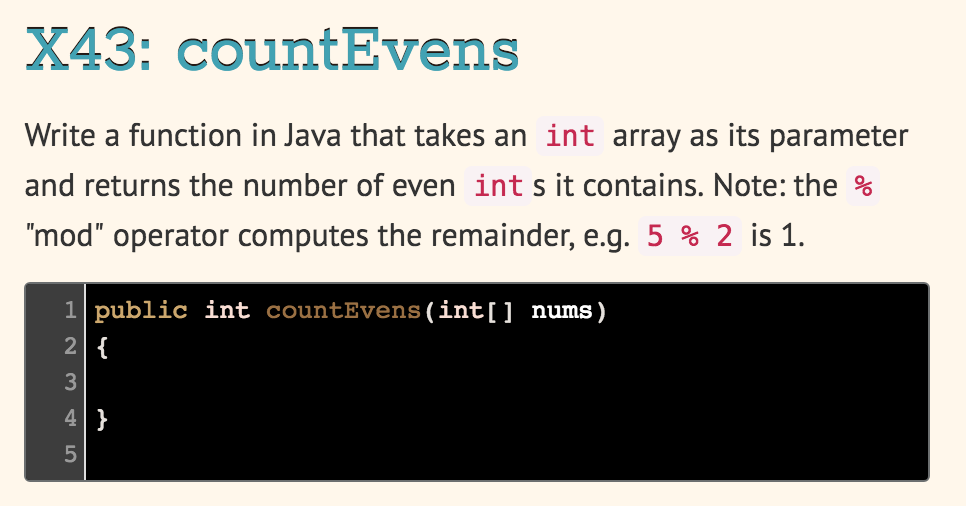
If you have two variables$aand$b, calculating$a % $b—usually pronounced "a modulo b" or "a mod b"—will give you the remainder after dividing$aby$b. Modulo is an integer operator, so it converts both the operands to integers before calculating the remainder. So, basically, modulo does integer division and then gives back whatever is left from the dividend. A 1-byte unsigned integer has a range of 0 to 255. Compare this to the 1-byte signed integer range of -128 to 127.

The most appropriate solution in this case is to use unsigned types to eliminate any possible implementation-defined behavior, as in this compliant solution. Avoid in-band error indicators, this solution fills a result argument with the mathematical result and returns nonzero only if the operation succeeds. Returns true if and only if the first argument has a bit set in the position specified by the second parameter. The first argument should have TINYINT, SMALLINT, INTEGER, BIGINT, BINARY, or BINARY VARYING data type. The second argument is zero-indexed; the least significant bit has position 0.


No comments:
Post a Comment
Note: Only a member of this blog may post a comment.